
Mazdutide
GLP-1 + glucagon (GCGR) dual agonist · once weekly · approved in China as Xinermei (2025)
Mazdutide is a weekly peptide that switches on two receptors, GLP-1 for appetite and glucagon, which acts on the liver. People run it for weight loss and steadier blood sugar. In phase 3 GLORY-1, 6 mg took off 14.01% of body weight in 48 weeks.
At a glance
- Dose
- 2 mg to start, then 4 or 6 mg a week
- How often
- Once a week, same day
- How
- A small injection under the skin
- When
- Any hour, on one fixed weekday
- Ramp
- One step up every 4 weeks, from 2 mg
The 30-second versionEverything on this page, fast
Strong weight loss · GLP-1 + glucagon · Blood-sugar control · Liver fat
A weekly GLP-1 and glucagon dual agonist. In phase 3 it took off 14.01% of body weight at 6 mg in 48 weeks and 16.65% at 9 mg in 60 weeks, and it beat dulaglutide on blood sugar in type 2 diabetes.
The basics
- One peptide, two receptors. GLP-1 curbs appetite and blood sugar, and glucagon acts on the liver.
- Discovered by Eli Lilly, developed in China by Innovent and approved there in 2025 as Xinermei.
Why people use it
- About 14% weight loss at 6 mg in the 48-week GLORY-1 trial, while placebo gained 0.30%.
- 16.65% at 9 mg over 60 weeks in GLORY-2, in adults with a BMI of 30 or more.
- Strong blood-sugar control in type 2 diabetes, ahead of dulaglutide in a head-to-head trial.
- A glucagon arm aimed at liver fat, which GLP-1-only drugs like semaglutide lack.
Stacks well with
- Cagrilintide adds amylin, a fullness signal that neither the GLP-1 nor the glucagon arm covers.
- Protein and lifting keep muscle while the deficit takes off fat.
Good to know
- Nausea, vomiting and diarrhea are the main issue. They peak on step-up weeks and climb at doses above 6 mg.
- Expect resting heart rate to rise, by about 5 to 15 beats a minute.
- Stop and some of the weight comes back, so people run it long term.
What it does
- Half lost 15% or moreIn GLORY-1, 49.5% on 6 mg lost at least 15% of their weight, against 2.0% on placebo.
- Up to 18% in a US trialIn Lilly's US phase 2, 10 mg and 16 mg took off 15.6% and 18.1% by week 32.
- Steadier blood sugarIn a type 2 diabetes trial, 6 mg lowered HbA1c, a long-term blood-sugar marker, 2.15 points against 0.14 on placebo.
- Beat dulaglutide head to headIn DREAMS-2, 6 mg lowered HbA1c 0.30 points more than dulaglutide 1.5 mg, with 5.76 points more weight loss.
- Liver fat down about two-thirdsIn Lilly's phase 2, people with fatty livers saw liver fat fall 67% to 70% on MRI by week 48.
- Outpaced semaglutide in miceIn obese mice, 15 days of dosing cut weight 33%, against 12% for semaglutide at twice the dose.
Sources:PMID 40421736PMID 42628555PMID 41407859PMID 41407860ClinicalTrials.gov NCT06124807US9938335B2
How it works
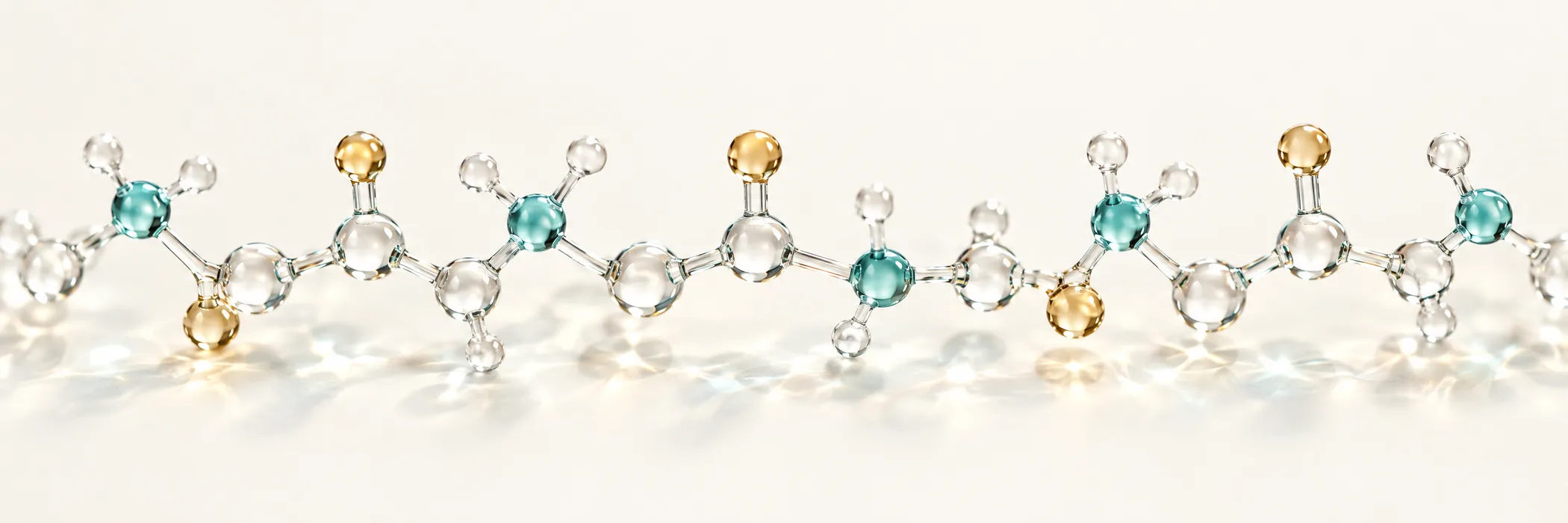

Two receptors, one molecule. Mazdutide switches on the GLP-1 receptor and the glucagon receptor (GCGR). It is an analog of oxyntomodulin, a gut hormone that acts on both.
Curbs appetite and blood sugar. At 16 mg it reduced appetite, lowered fasting glucose and insulin, and slowed stomach emptying only slightly.
Works on the liver. The glucagon arm is aimed at liver fat. At 16 mg, ketones rose, which the authors read as more fat burning in the liver. In obese mice it raised energy burn from the second week, and semaglutide did not.
Lasts a week. A C20 fatty acid on lysine 20 binds albumin, a blood protein, which stretches the half-life to about 8 days.
Sources:KEGG D12225Innovent HKEX 2025PMID 40832785US9938335B2
How to dose it
Once a week under the skin, stepped up every 4 weeks from 2 mg to ease nausea.
Dose tiers2 mg for 4 weeks, then 4 mg, then 4 or 6 mg a week.
- Weeks 1 to 4:
- 2 mg once a week, the first step of the 4 and 6 mg phase 3 arms.
- Weeks 5 to 8:
- 4 mg once a week. The GLORY-1 4 mg arm stayed here.
- Week 9 on:
- 6 mg once a week for the 6 mg arm. In GLORY-1, 4 mg took off 11.00% and 6 mg 14.01% by week 48.
- Higher doses:
- GLORY-2 stepped up gradually to 9 mg. Lilly's US trials climbed from 1.5 or 2 mg to 10 or 16 mg.
- The 16 mg limit:
- In the US phase 2, 20% on 16 mg stopped for side effects, mostly gut, the most of any dose.
How to injectInto the fat under the skin, once every 7 days. Rotate sites.
- Injection site:
- Belly (a few centimeters from the navel), outer thigh or upper arm. Rotate each week to avoid lumps.
- Weekly timing:
- One fixed weekday keeps levels even (see Best time to take it below).
- Food window:
- Meals do not affect the shot. Smaller, low-fat meals on step-up weeks ease nausea.
Cycle and breaksThe trials dosed it nonstop, for 12 to 60 weeks.
- No cycling:
- No trial cycled it on and off.
- On stopping:
- Weight partly comes back. Eight weeks after the last 16 mg dose, average loss had shrunk from about 20% to 14.1%.
Mixing the vialThe calculator starts at 10 mg with 2 mL of bacteriostatic water.
- Default mix:
- 10 mg in 2 mL makes 5 mg per mL. On a U-100 syringe, 2 mg takes 40 units and 4 mg takes 80 units.
- 6 and 9 mg:
- At 5 mg per mL, 6 mg takes 120 units, two draws. With 1 mL of water instead, 6 mg takes 60 units and 9 mg takes 90 units.
- Doses per vial:
- A 10 mg vial holds five 2 mg doses or two 4 mg doses.
Sources:ClinicalTrials.gov NCT05607680PMID 40421736PMID 42251595PMID 42628555ClinicalTrials.gov NCT06124807PMID 40832785PMID 34430840
Best time to take it


Implied best time
Anytime (consistent, weekly)
One fixed day each week. The day matters, the hour does not.
- Its half-life is about 8 days, so blood levels stay steady across the week. One fixed weekday keeps them even.
- In phase 1b, gut side effects came mostly within 3 to 4 days of a dose, so the dose day sets when they land.
- Effects build over weeks. With an 8-day half-life, levels take about 5 weekly doses to even out, so week-to-week consistency matters more than the clock.
Sources:PMID 40832785PMID 34430840
What to stack it with


Semaglutide, tirzepatide, survodutide and retatrutide all hit the GLP-1 receptor too, so pairing them doubles up. Useful partners work a different pathway.
Mazdutide + CagrilintideAdds amylin, a fullness signal mazdutide does not touch.
- Why it works:
- Cagrilintide copies amylin, which slows the stomach and curbs appetite through its own receptor, apart from GLP-1 and glucagon.
- The protocol:
- People finish mazdutide's 4-week ladder first, then add cagrilintide at 0.3 to 0.6 mg once a week, on the same day at a different site.
- Outcome:
- People add it when weight loss stalls, for a second fullness signal without a second GLP-1 drug.
Mazdutide + creatine + liftingKeeps muscle while the weight comes off.
- Why it works:
- Losses near 14% to 20% take some muscle with them. Lifting slows muscle loss, and creatine supports training in a deficit.
- The protocol:
- Creatine monohydrate 3 to 5 g a day, 3 to 4 lifting sessions a week and protein at 1.6 to 2.0 g per kg a day.
- Outcome:
- For people who care about body composition more than the number on the scale.
Mazdutide + BPC-157Gut-lining support for the step-up weeks, not for weight loss.
- Why it works:
- Nausea, vomiting and diarrhea set the pace of the ramp. BPC-157 is studied for gut-lining repair.
- The protocol:
- BPC-157 250 to 500 mcg under the skin once a day through the step-ups, then tapered once a dose sits well.
- Outcome:
- People with a sensitive gut add it to ease nausea during the ramp.
Support nutrients
Settle the gut, keep muscle and support the liver.
Nausea and constipationGut trouble peaks on step-up weeks, mostly within 3 to 4 days of each dose.
- Ginger:
- 1 to 2 g a day, capsules or tea, for the first 3 to 4 days after each shot.
- Vitamin B6:
- 25 to 50 mg of pyridoxine a day through the step-up weeks.
- Constipation:
- Magnesium glycinate 300 to 400 mg at bedtime, soluble fiber 10 to 15 g a day and 2 to 3 L of water.
Electrolytes and vitaminsEating much less, plus vomiting or diarrhea, drains minerals.
- Electrolytes:
- At least 500 mg sodium, 300 mg potassium and 200 to 300 mg magnesium a day. Cramps, fatigue or dizziness point to a shortfall.
- Multivitamin:
- One a day covers zinc, B vitamins, iron and vitamins A, D, E and K.
Protect lean massPart of a 14% to 20% weight loss is muscle.
- Protein:
- 1.6 to 2.0 g per kg of body weight a day, protein first at each meal.
- Lifting:
- 3 to 4 sessions a week of compound lifts.
- Creatine:
- 3 to 5 g of creatine monohydrate a day, no loading phase.
Support the liverThese help the liver clear fat and keep it off.
- Choline:
- 400 to 550 mg a day, which the liver uses to export fat.
- Omega-3:
- 2 to 4 g of combined EPA and DHA a day from fish oil, with meals.
- Fructose and alcohol:
- Both refill liver fat, so refined sugar, juice and alcohol stay low.
Dose calculator
Question 1 of 3
How much is in your vial?
Find the number next to mg on the Mazdutide label.
Side effects and what to watch
What people notice. Nausea, vomiting and diarrhea, mostly mild to moderate, worst on step-up weeks and at higher doses. At 9 mg in GLORY-2, vomiting hit 53.1% against 1.3% on placebo.
How people handle it. A slow climb from 2 mg. In GLORY-1, under 2% stopped for side effects; in the US phase 2, 20% on 16 mg did.
Worth knowing. Resting heart rate rises about 5 to 15 beats a minute. In the phase 2 diabetes trial, low blood sugar hit 10% against 8% on placebo.
Skip it or take care if. The Chinese phase 2 obesity trial excluded medullary thyroid cancer or MEN 2, including family history, plus pancreatitis, gallbladder disease or a resting pulse over 100.
Sources:PMID 42251595PMID 40421736PMID 42628555PMID 40832785PMID 37943529PMID 38092790
Common questions
How is mazdutide dosed?
Once a week under the skin. GLORY-1 started at 2 mg for 4 weeks, then 4 mg, then held 4 or 6 mg. GLORY-2 used 9 mg; Lilly's US trials reached 16 mg.
How much weight do people lose?
In GLORY-1, 4 mg took off 11.00% and 6 mg 14.01% of body weight at 48 weeks. In GLORY-2, 9 mg took off 16.65% at 60 weeks. Both trials enrolled Chinese adults.
How is it different from survodutide and retatrutide?
Survodutide works the same two receptors with a shorter C18 fatty acid. Retatrutide adds a third, GIP, and has a half-life of about 6 days against mazdutide's 8. No trial has compared them head to head.
Can I stack it with tirzepatide?
No trial has tested the pair. Both hit the GLP-1 receptor, so the stack doubles it, and each brings its own nausea. Cagrilintide adds a separate fullness pathway.
Do I need to cycle it?
No. Every trial dosed it nonstop. Eight weeks after the last 16 mg dose, average loss had shrunk from about 20% to 14.1%.
What molecular weight should a certificate show?
About 4563 g/mol for C210H322N46O67, the 34-residue structure. PubChem's record titled Mazdutide is drawn one serine short, at 4476 g/mol, so a certificate quoting 4476 matches that error.
Deep dive
Doses used in studies · Molecular identity · References
10From the researchDoses used in studies
These are the doses from the published studies. Human trials gave one injection under the skin a week; mouse doses are per kilogram.
| Dose | Route | Model | Outcome | Sources: |
|---|---|---|---|---|
| Up to 3, 4.5 or 6 mg (from 1, 1.5 or 2 mg, 4-week steps) | SC weekly (12 wk) | Human (phase 1b, Chinese adults with overweight or obesity, n=36) | Body weight −4.81%, −6.40% and −6.05% vs +0.60% on placebo at week 12; no serious adverse events | PMID 34430840 |
| 9 mg (3, 6, then 9 mg); 10 mg (2.5, 5, 7.5, then 10 mg) | SC weekly (12 and 16 wk) | Human (phase 1b, Chinese adults with overweight or obesity, n=24) | Body weight −11.7% vs −1.8% on placebo at week 12 (9 mg) and −9.5% vs −3.3% at week 16 (10 mg); no serious adverse events | PMID 36247927 |
| 3 / 4.5 / 6 mg | SC weekly (24 wk) | Human (phase 2, Chinese adults with overweight or obesity, n=248) | Body weight −6.7%, −10.4% and −11.3% vs +1.0% on placebo at week 24 | PMID 38092790 |
| 3 / 4.5 / 6 mg | SC weekly (20 wk) | Human (phase 2, type 2 diabetes, n=250) | HbA1c −1.41% to −1.67% vs −1.35% on dulaglutide 1.5 mg and +0.03% on placebo; body weight up to −7.1% | PMID 37943529 |
| 4 / 6 mg | SC weekly (48 wk) | Human (phase 3 GLORY-1, Chinese adults with obesity or overweight, n=610) | Body weight −11.00% and −14.01% vs +0.30% on placebo at week 48 (treatment-policy estimand, everyone randomized); 35.7% and 49.5% lost at least 15% | PMID 40421736 |
| 9 mg | SC weekly (60 wk) | Human (phase 3 GLORY-2, Chinese adults with BMI ≥30, n=461) | Body weight −16.65% vs −1.50% on placebo at week 60; vomiting 53.1%, nausea 46.9%, diarrhea 39.4%; 2.9% stopped for side effects | PMID 42251595 |
| 4 / 6 mg | SC weekly (24 wk) | Human (phase 3 DREAMS-1, type 2 diabetes on diet and exercise, n=320) | HbA1c −1.57% and −2.15% vs −0.14% on placebo; body weight −5.61% and −7.81% vs −1.26% | PMID 41407859 |
| 4 / 6 mg | SC weekly (28 wk) | Human (phase 3 DREAMS-2, type 2 diabetes on oral drugs, n=731) | HbA1c 0.24 and 0.30 points lower than on dulaglutide 1.5 mg; body weight 3.78 and 5.76 points lower | PMID 41407860 |
| Up to 16 mg (from 1.5 or 2 mg) | SC weekly (20 wk) | Human (phase 1, US adults without diabetes, n=32) | Body weight −20.0% and −21.0% vs −0.1% on placebo at week 20; −14.1% eight weeks after the last dose | PMID 40832785 |
| 3 then 6 mg, 10 mg or 16 mg | SC weekly (48 wk) | Human (phase 2, US adults without type 2 diabetes, n=179) | Body weight −7.3%, −15.6% and −18.1% vs −0.9% on placebo at week 32 (efficacy estimand); 20% on 16 mg stopped for side effects, mostly gut | PMID 42628555 |
| 15 or 30 nmol/kg every 3 days | SC (15 days) | Mouse (diet-induced obesity) | Body weight −19% and −33% vs vehicle, against −8% and −12% for semaglutide at 30 and 60 nmol/kg; energy burn rose from week 2 at 15 nmol/kg | US9938335B2 |
| 100, 200 or 400 µg/kg every 3 days | SC (4 weeks) | Mouse (high-fat-diet fatty liver) | Less liver fat, liver injury and inflammation, with lower ER stress through the PERK pathway | PMID 41901218 |
11ChemistryMolecular identity
- CAS / UNII
- 2259884-03-0 · MB76Z4IBZ5
- Molecular weight
- 4563.07 g/molKEGG D12225; PubChem CID 172871914
- Molecular formula
- C210H322N46O67KEGG D12225; PubChem CID 172871914
- Monoisotopic mass
- 4560.32 DaPubChem CID 172871914; KEGG D12225
- Sequence (34 AA)
- HXQGTFTSDYSKYLDEKKAKEFVEWLLEGGPSSG-NH₂ (X = Aib; Lys20 acylated)KEGG D12225; FDA GSRS
- Structure / class
- Oxyntomodulin analog; Aib at position 2, C-terminal amide, C20 diacid on Lys20 via γGlu and two AEEA spacersFDA GSRS; KEGG D12225
- Molecular target
- GLP-1 receptor + glucagon receptor (GCGR) dual agonistPMID 35750681
- Origin
- Discovered by Eli Lilly (LY3305677); developed in China by Innovent Biologics (IBI362) under licenseUS9938335B2; Innovent HKEX 2025
- Brand / approval
- Approved in China as Xinermei for weight management (June 2025) and type 2 diabetes (September 2025)PMID 41028652; Innovent HKEX 2025
- Regulatory status
- Not FDA-approved; not named on the 2026 WADA Prohibited List or Monitoring ProgramFDA; WADA 2026
12Primary sourcesReferences
- KEGG D12225KEGG DRUG D12225, Mazdutide (formula, mass, sequence, GLP1R and GCGR targets)
- FDA GSRSFDA GSRS, MAZDUTIDE, UNII MB76Z4IBZ5 (Aib at 2, C20 diacid on Lys20, C-terminal amide)
- PubChem CID 172871914PubChem CID 172871914, the record that matches the INN structure (the record titled Mazdutide, CID 167312357, is one serine short at 4476 g/mol)
- US9938335B2Eli Lilly, US9938335B2, glucagon and GLP-1 co-agonist compounds (Example 2 is mazdutide; mouse weight, energy burn and monkey PK)
- PMID 34430840Ji et al., EClinicalMedicine 2021 (phase 1b, Chinese adults with overweight or obesity)
- PMID 35750681Jiang et al., Nat Commun 2022 (phase 1b, type 2 diabetes; GLP-1 and glucagon receptor dual agonist)
- PMID 36247927Ji et al., EClinicalMedicine 2022 (phase 1b, 9 mg and 10 mg cohorts)
- PMID 38092790Ji et al., Nat Commun 2023 (phase 2, Chinese adults with overweight or obesity, 24 weeks)
- PMID 37943529Zhang et al., Diabetes Care 2024 (phase 2, type 2 diabetes, 20 weeks)
- PMID 40421736Ji et al., N Engl J Med 2025 (GLORY-1, phase 3, obesity or overweight, 48 weeks)
- PMID 42251595Gao et al., JAMA 2026 (GLORY-2, phase 3, 9 mg, 60 weeks)
- PMID 41407859Zhu et al., Nature 2026 (DREAMS-1, phase 3, type 2 diabetes vs placebo)
- PMID 41407860Guo et al., Nature 2026 (DREAMS-2, phase 3, type 2 diabetes vs dulaglutide)
- PMID 40832785Bhattachar et al., Diabetes Obes Metab 2025 (Lilly phase 1 up to 16 mg; half-life about 8 days)
- PMID 42628555Hsia et al., Lancet Diabetes Endocrinol 2026 (Lilly US phase 2, up to 16 mg, 48 weeks)
- ClinicalTrials.gov NCT06124807ClinicalTrials.gov NCT06124807, Lilly US phase 2 (dose steps; posted results, including liver fat by MRI)
- ClinicalTrials.gov NCT05607680ClinicalTrials.gov NCT05607680, GLORY-1 arms (2 mg for 4 weeks, then 4 mg, then 6 mg)
- PMID 41028652Shirley, Drugs 2025 (Mazdutide: First Approval; Xinermei, China, June and September 2025)
- Innovent HKEX 2025Innovent Biologics, HKEX announcement, 27 June 2025 (NMPA approval for chronic weight management; Lilly license for China)
- PMID 41901218Gan et al., Pharmaceuticals (Basel) 2026 (fatty-liver mice)
- PMID 36356832Zimmermann et al., Mol Metab 2022 (survodutide discovery; C18 fatty acid)
- PMID 35985340Coskun et al., Cell Metab 2022 (retatrutide discovery; GIP, GLP-1 and glucagon receptor triple agonist)
- PMID 36354040Urva et al., Lancet 2022 (retatrutide phase 1b; half-life about 6 days)
- FDAFDA, concerns with unapproved GLP-1 drugs used for weight loss (names mazdutide)
- WADA 2026WADA 2026 Prohibited List and Monitoring Program (mazdutide not named)
Research use only · Not medical advice · Updated 2026-11-05